The University of Illinois Springfield has released its 2024-2025 Enrollment and Retention Management (ERM) Annual Impact Report, outlining key progress and initiatives designed to strengthen student recruitment, support, and success.
According to the ERM office, the report aims to highlight “key initiatives, outcomes, and progress toward institutional goals,” including efforts to promote UIS regionally, evaluate recruitment and retention strategies, and streamline processes to support student persistence and degree completion.

The ERM division includes the Office of Admission, Office of Financial Assistance, and the Office of Records and Registration. Together, these units reported a wide range of engagement and support efforts, including sending 5.3 million emails to prospective and incoming students and awarding more than $7 million in university scholarships alongside over $1 million in donor-funded aid.
Online enrollment sees growth amid new OPM partnership

One significant development highlighted in the report is growth in online enrollments: up by 74 students in Fall 2023-24 and 57 in Spring 2024-25. The increase coincides with UIS’ partnership with Risepoint, a for-profit Online Program Management (OPM) firm hired to support select graduate certificate programs.
The partnership, which began in Fall 2025, focuses initially on the MBA Certificate in Marketing and Graduate Certificate in Marketing. A WBEZ-obtained contract shows Risepoint receives 50% of tuition revenue from students it helps recruit.
Associate Vice Chancellor Brian Clevenger said the collaboration is part of broader efforts to bolster enrollment.
“UIS has partnered with several external companies and vendors over the years to enhance enrollment efforts,” Clevenger said. “Through collaboration with Risepoint, UIS has improved our outreach to students and expanded our data-driven insights into ways to improve enrollment and retention.”
Retention remains key priority
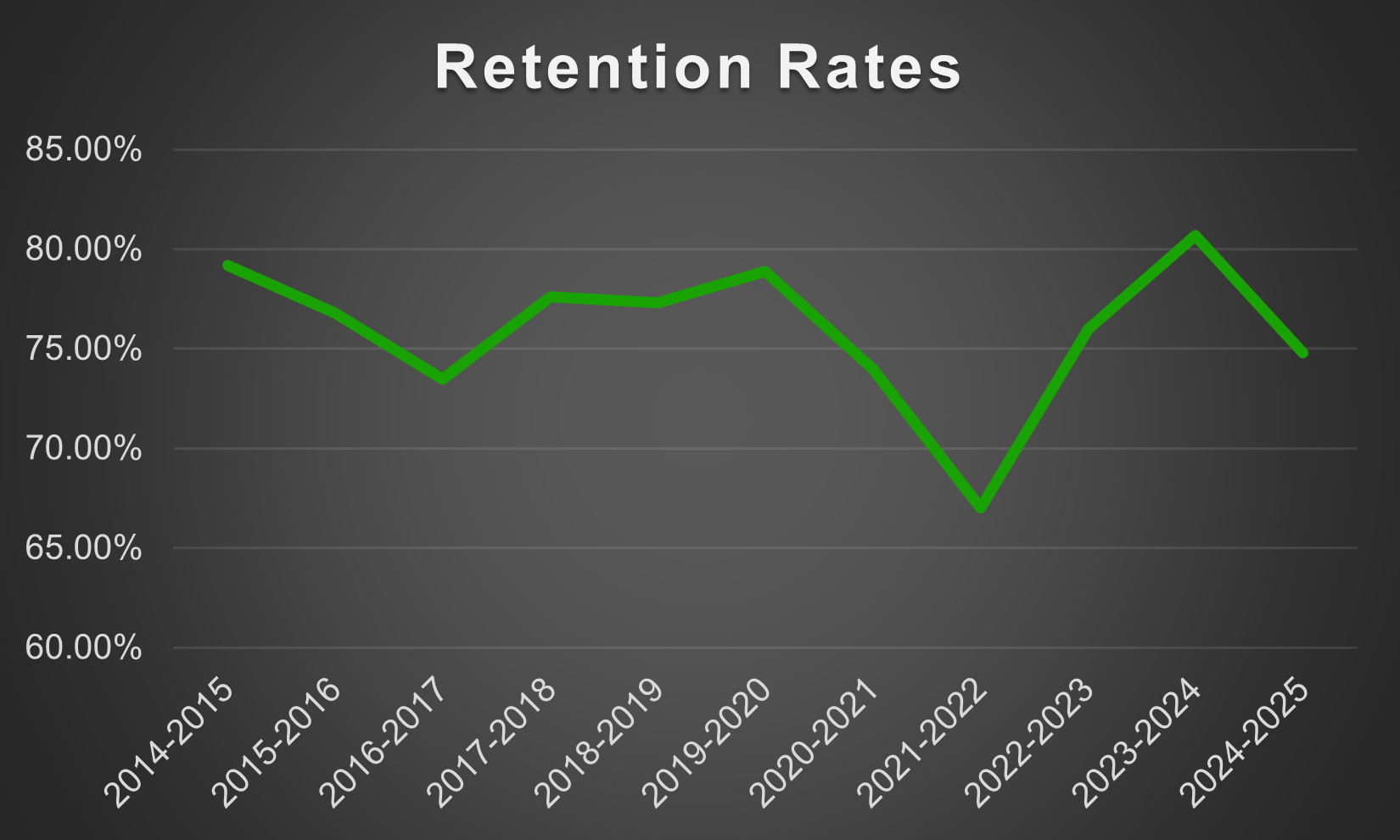
Retention remains a major focus for UIS, which emphasizes the academic and financial importance of supporting students throughout their college career.
“Strong retention ensures the sustainability of our programs, supports campus planning, and reflects the quality of the student experience at UIS,” the report states.
While UIS’ most recent overall retention rate fell from 80.7% to 74.8%, Clevenger noted comparisons to national patterns:
- First-year student retention: 69.8% at UIS vs. ~70% national average
- Transfer student retention: 76.2%
- Graduate student retention: 84%
“Retention patterns often vary across student groups,” Clevenger said. “First-year students typically experience the greatest transition challenges, while transfer and graduate students often persist at higher rates due to prior experience and clearer academic goals.”
Enrollment trends over time
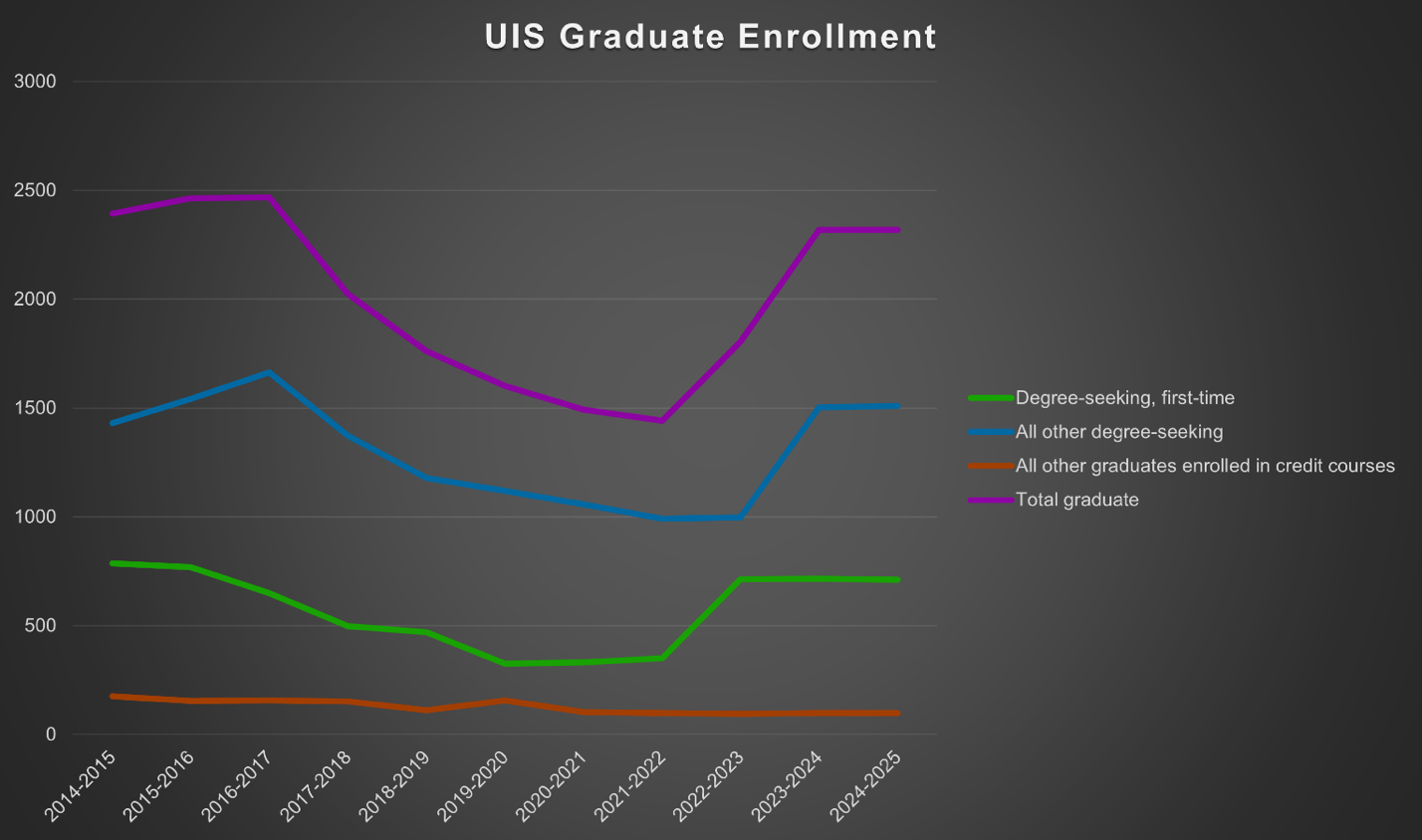
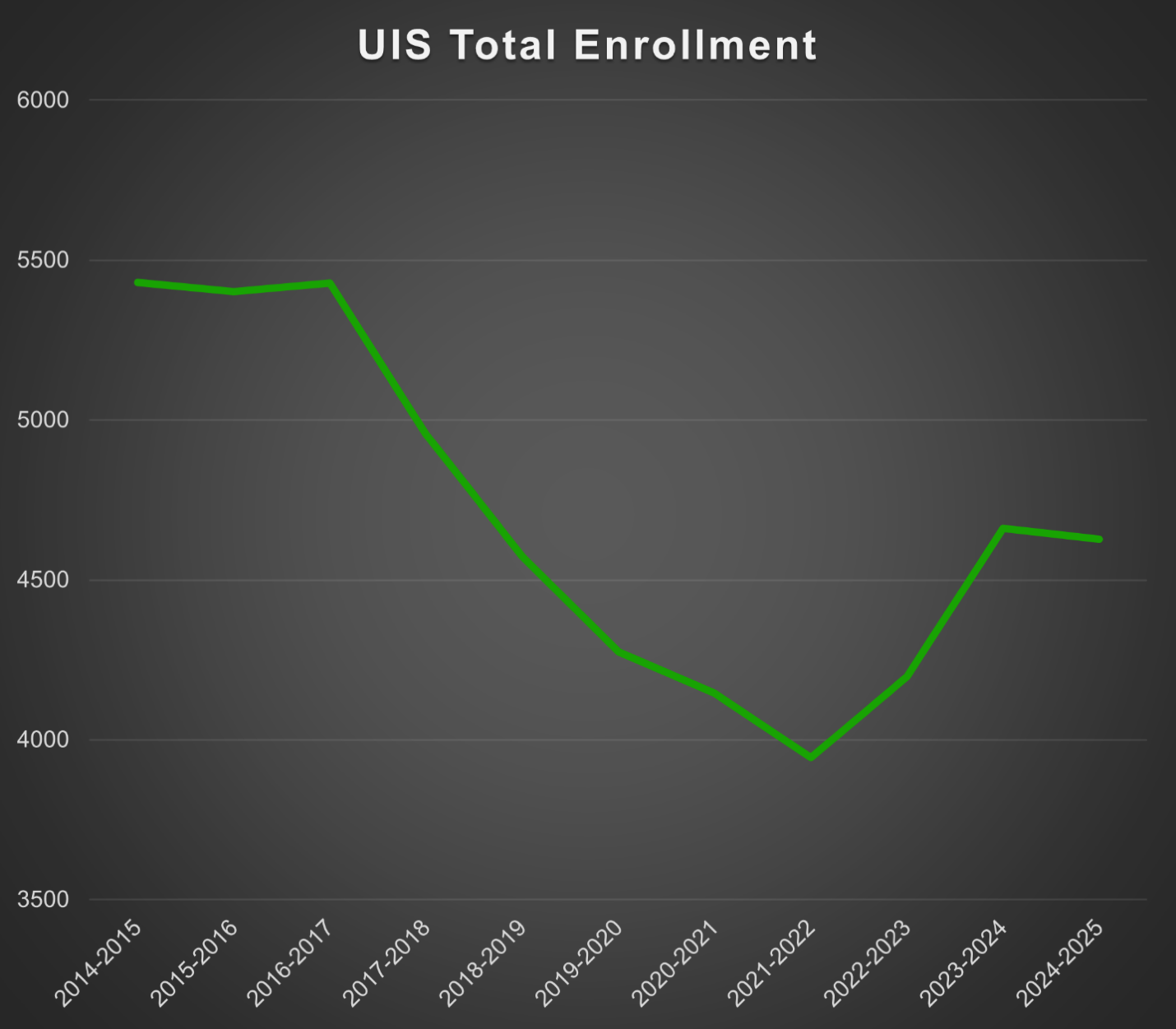
UIS enrollment has fluctuated significantly over the past decade, peaking above 5,500 students in 2016-17 before declining to around 4,000 in 2021-22. Recent years have shown signs of recovery, with enrollment rising to approximately 4,700 students in 2023-24 before stabilizing.
Strategic outlook: AI, advising, and student success
Looking forward, UIS plans to update its Strategic Enrollment and Retention Management Plan for 2025-26, including exploring the use of artificial intelligence to support student outreach and services.
Clevenger said the university is prioritizing coordinated retention efforts and improved academic advising as part of its “North Star” institutional goals, which align with the UIS Strategic Compass 2018-2028.
North Star Initiative: Three focus areas
The university’s North Star Initiative centers on:
- Academic portfolio review and prioritization
- Deficit reduction
- Student retention and success
“UIS has set clear goals around improving student retention and graduation rates,” Clevenger said. “Strategic enrollment growth will help balance the budget and strengthen overall student success.”