Artificial intelligence is often praised as the next great technological revolution, powering everything from customer-service chatbots to autonomous vehicles. But behind the futuristic sheen lies a growing environmental cost that experts say can no longer be ignored.
Training advanced AI models requires immense computing power housed in sprawling data centers—industrial-scale facilities packed with specialized servers running around the clock. According to researchers at the University of Massachusetts, training a single large language model can generate more than 600,000 pounds of carbon dioxide;roughly equal to the lifetime emissions of five gasoline-powered cars.
As the race to build larger and more capable AI systems intensifies, the energy demands rise sharply. Newer models require more processing time, greater storage capacity, and far more electricity to power and cool the machines behind the algorithms.

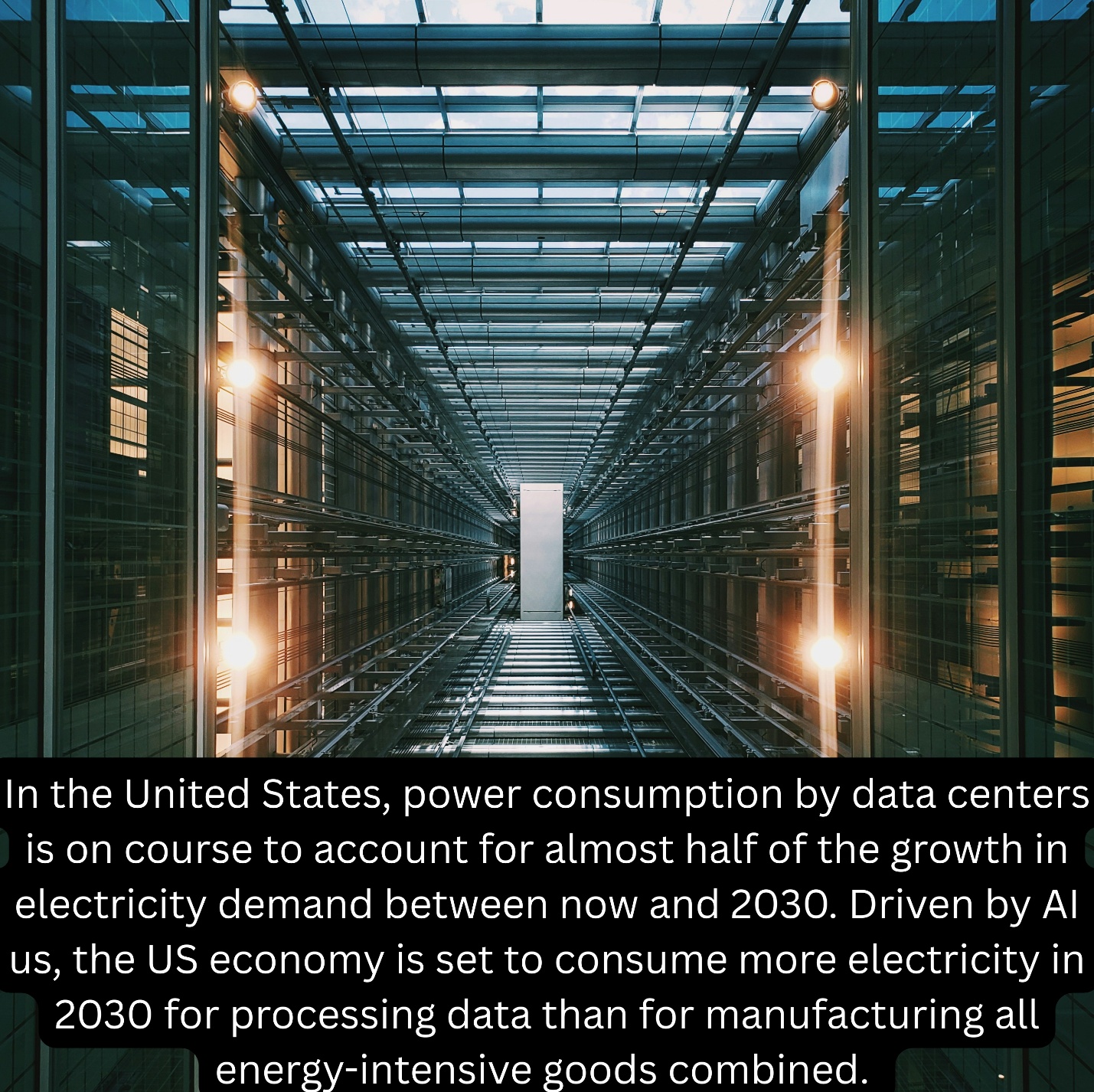
The International Energy Agency warns that U.S. data-center electricity use is poised to surge dramatically. By 2030, energy used for data processing, much of it driven by AI, could exceed the energy consumed by manufacturing all energy-intensive goods in the country. Nearly half of the nation’s electricity-demand growth over the next decade may come from data centers alone.
Cooling the hardware adds another layer of strain. Industrial-scale refrigeration systems run continuously to prevent overheating, pushing energy consumption even higher and placing increased pressure on the power grid.

Tech giants are beginning to acknowledge the problem. Companies including Google, Amazon, and Microsoft have pledged to reach carbon-neutral operations in the coming years. Some researchers are exploring “green AI,” efficiency-focused models designed to perform complex tasks while consuming less energy. Google reports that despite soaring demand, improvements in data-center operations have led to a 12% reduction in related emissions.
Many experts believe AI has the potential to help confront global challenges, from climate-modeling to medical-research breakthroughs. But they argue that addressing AI’s environmental footprint is essential to ensuring the technology delivers net benefits to society.
As innovation accelerates, so does responsibility. The future of AI, analysts say, must be powered not only by smarter algorithms, but by cleaner, more sustainable energy.