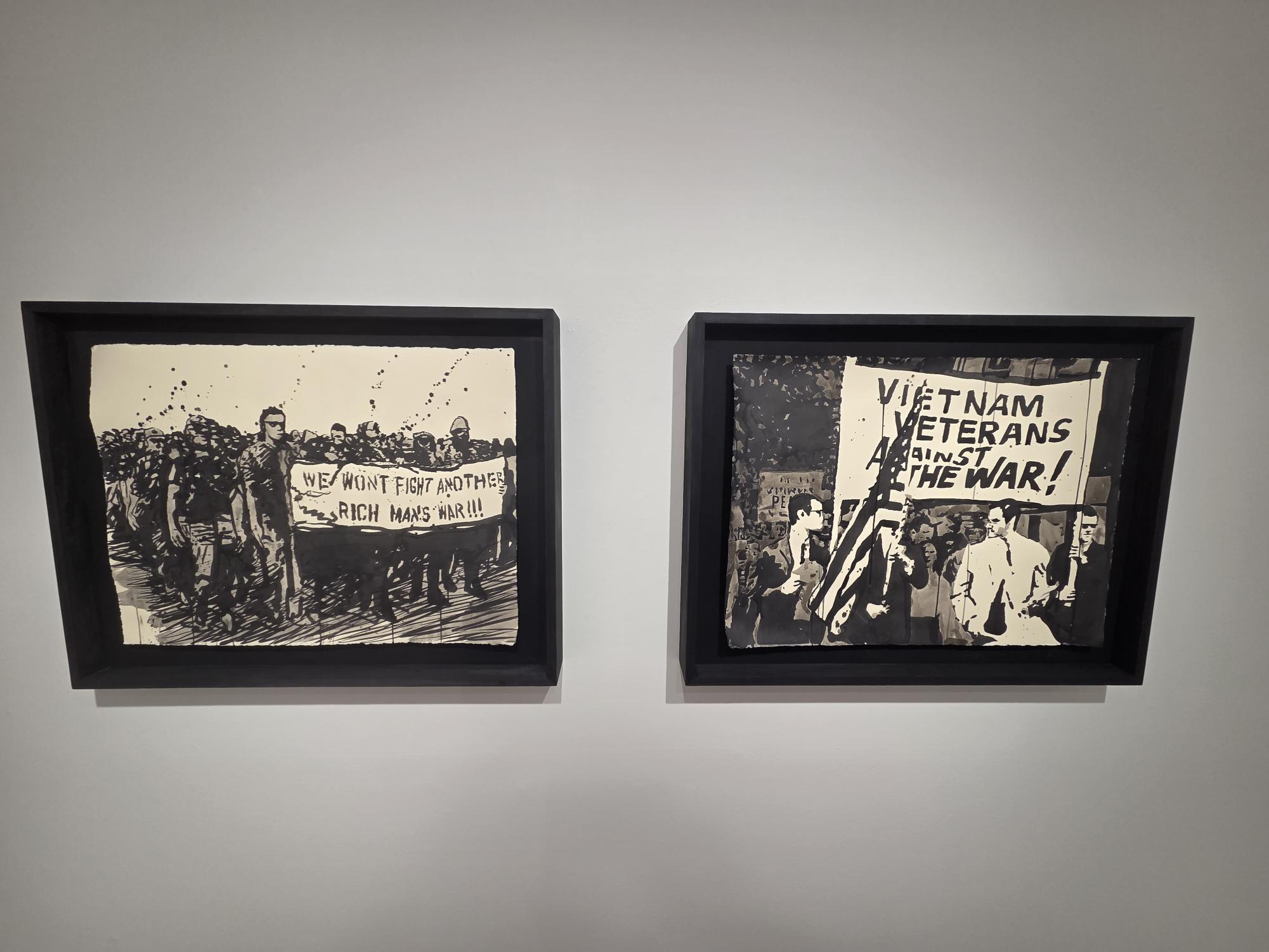
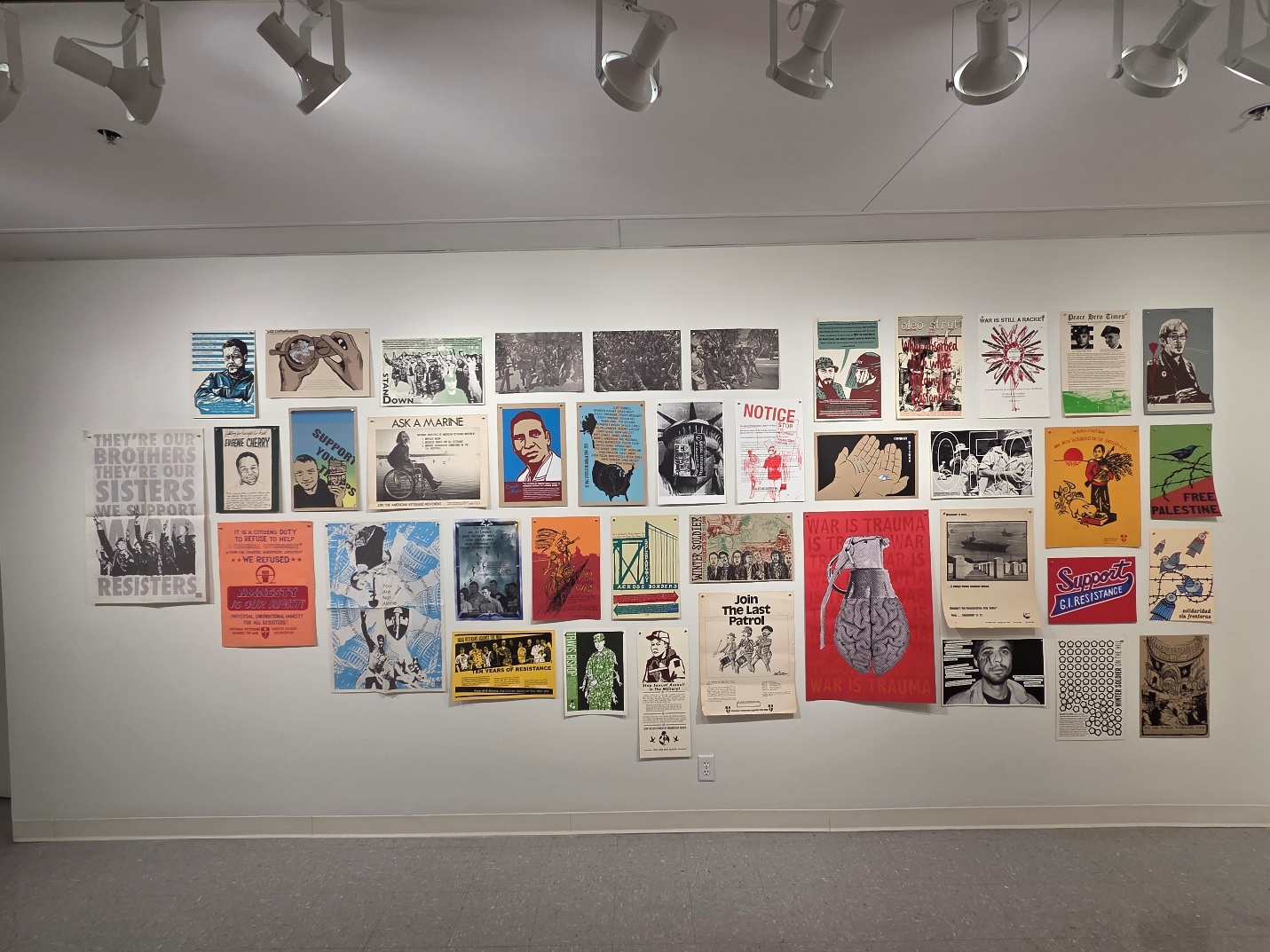
On Wednesday, October 22, artist, activist, and Iraq War veteran Aaron Hughes spoke at UIS as part of the ECCE Speaker Series. In Brookens Auditorium, Hughes reflected on his journey from military service to anti-war activism, and how art became his method of social engagement and critique. Following the talk, attendees visited the Visual Arts Gallery to view his exhibition, A Radical Turn.
“It is highlighting the turn from militarism to solidarity that many veterans and service members have made over the last 100 years,” Hughes explained when discussing the meaning behind the exhibition’s title.
Hughes emphasized the role veterans play in shaping anti-war discourse, noting that his work seeks to honor the creative and political voices of those who served.
“This exhibition is about looking at the art they created, the posters they made, and how they speak to today,” he said. “I’m looking at the legacy of Vietnam veterans against the war through Iraq veterans against the war, and the art culture they built.”
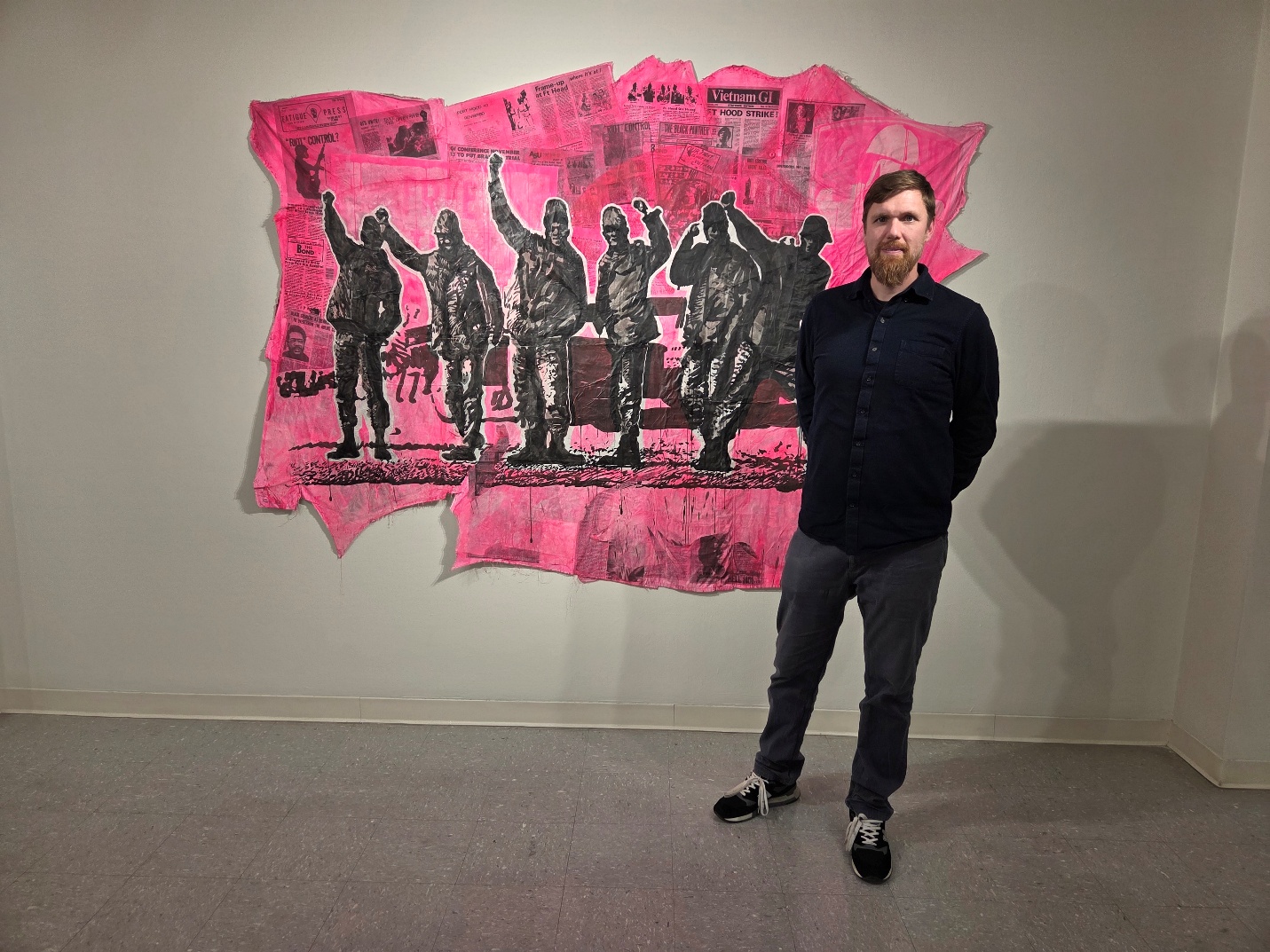
Hughes served in the Illinois National Guard from 2000 to 2006 and was deployed to Kuwait and Iraq from 2003 to 2004. That experience, he shared, fundamentally reshaped his worldview:
“That experience was radicalizing. It made me realize I didn’t want to be part of anything destructive anymore. I wanted to be part of something creative, and that led me to art.”
He noted that his activism extends beyond his personal experience:
“I’ve been deeply involved with Iraq Veterans Against the War and About Face Veterans Against the War. We are building on the work of Vietnam veterans before us.”

Student Responses
UIS student Austin Brock, who comes from a military family, found the presentation thought-provoking. “The event was eye-opening because my dad and stepmom served in the Iraq War,” he said. “I agree we should look at different ways to spread democracy, but I disagree with the idea that we don’t need a military. With global powers like China and Russia, we need a military to protect democracy.”
Student La’Ron Leftridge felt a strong emotional impact when viewing the artwork.
“The art expresses support against war and how war can strip away humanity,” he said.
Another student, Erin Jones, reflected on the personal and historical depth in Hughes’ exhibit: “It’s meaningful. It helps you see what veterans experience and teaches you about the history behind the images.”
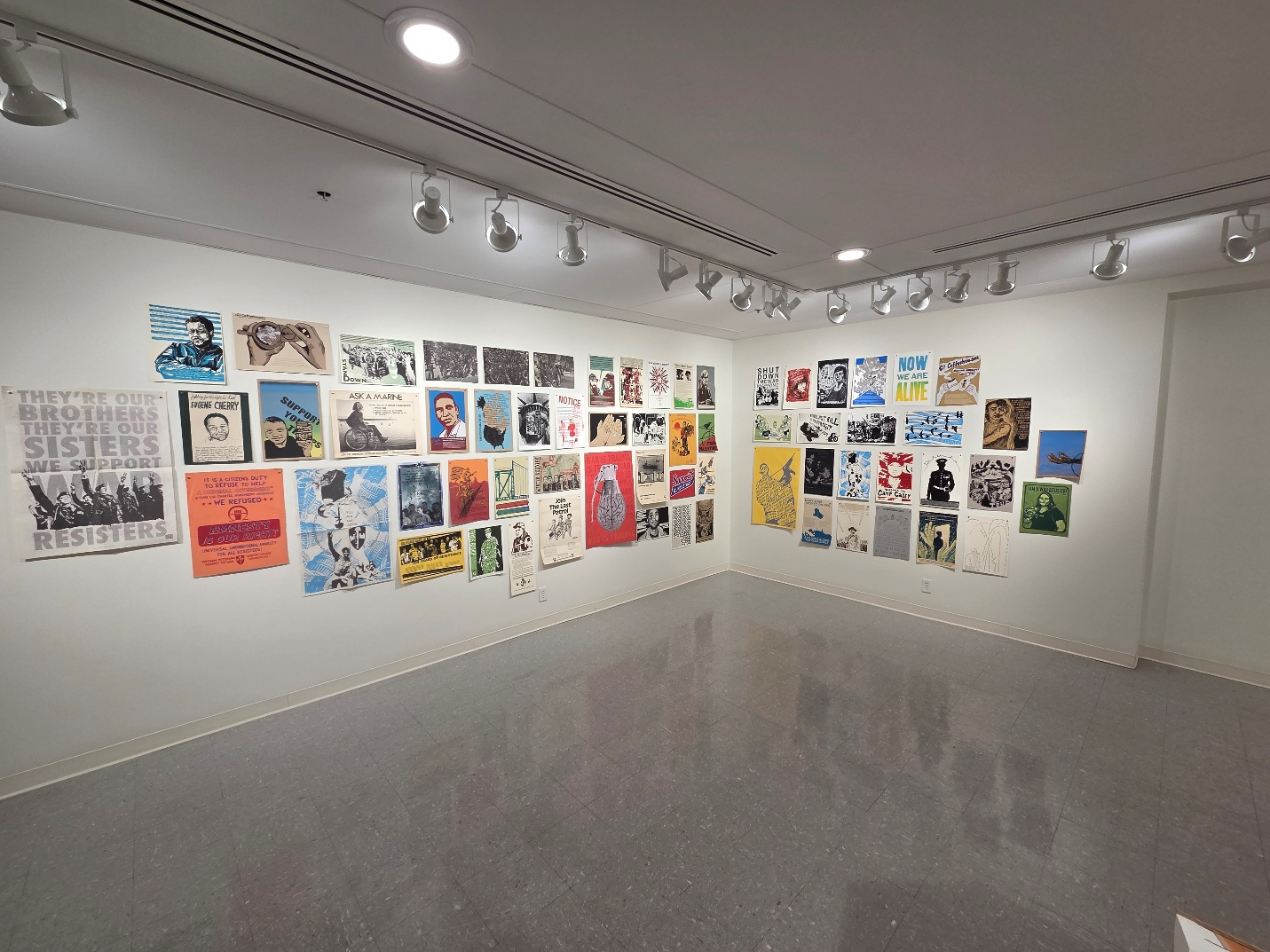
Hughes concluded by emphasizing the importance of historical memory and creative resistance. “My journey as an artist has exposed me to the history and legacy of veterans and service members,” he said. “By creating work critical of war and building on that legacy, this exhibition marks a radical turn.”