

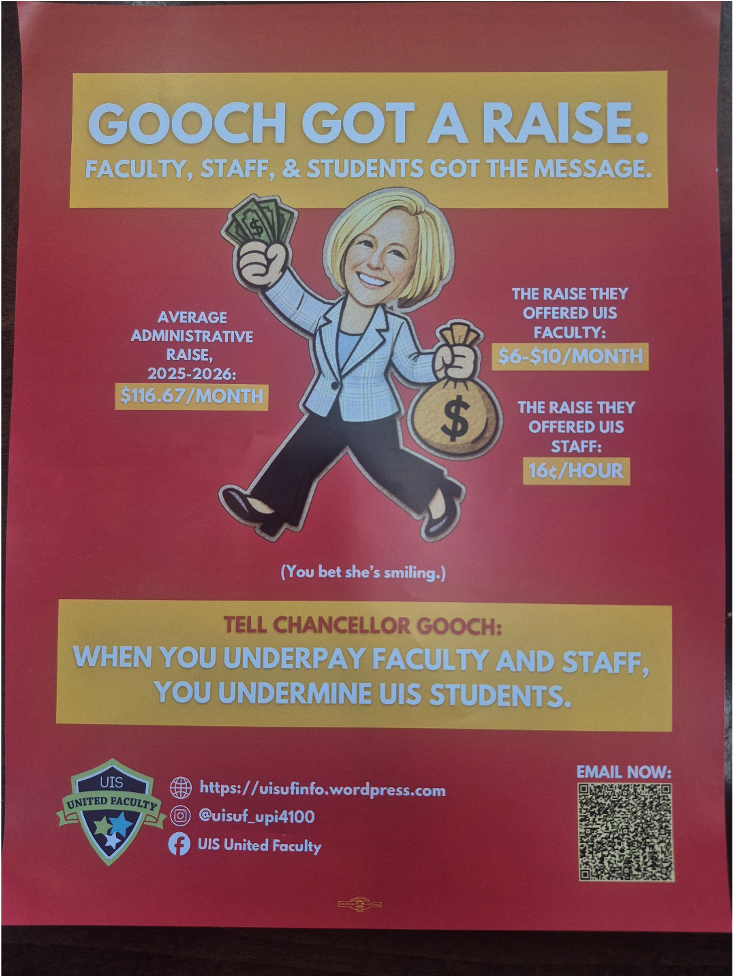
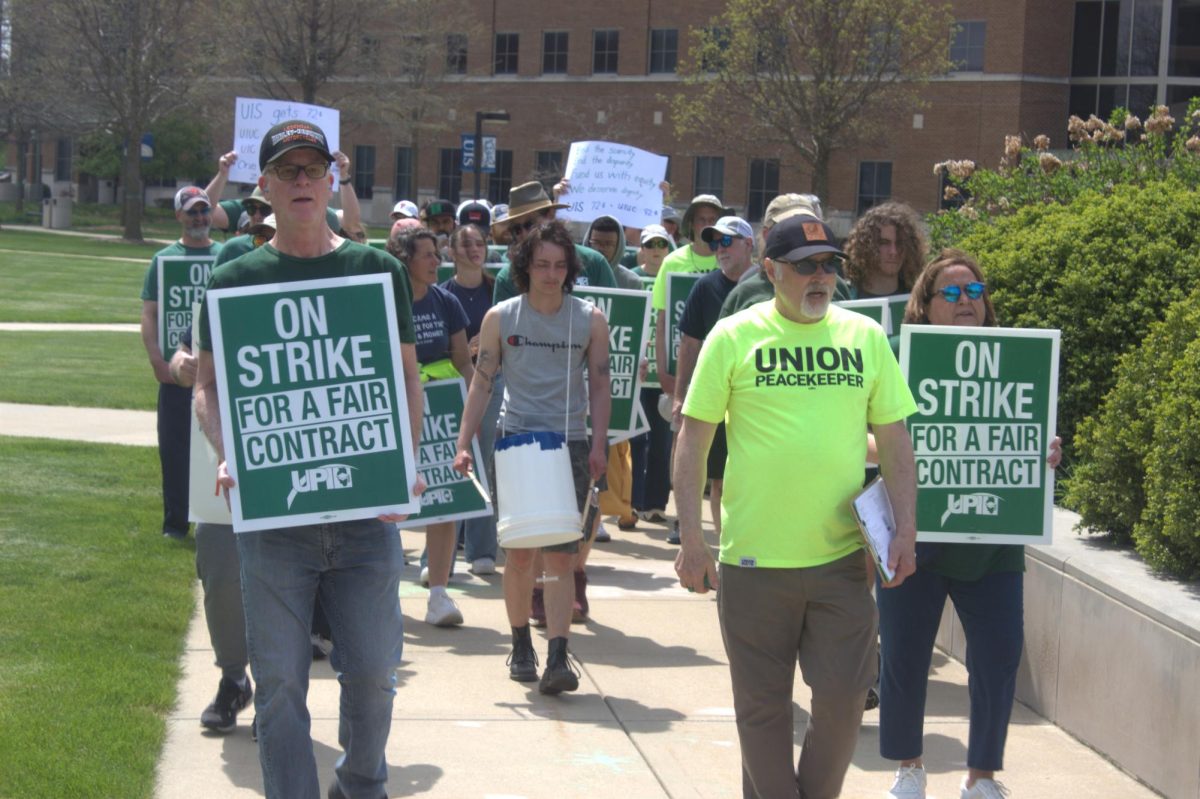
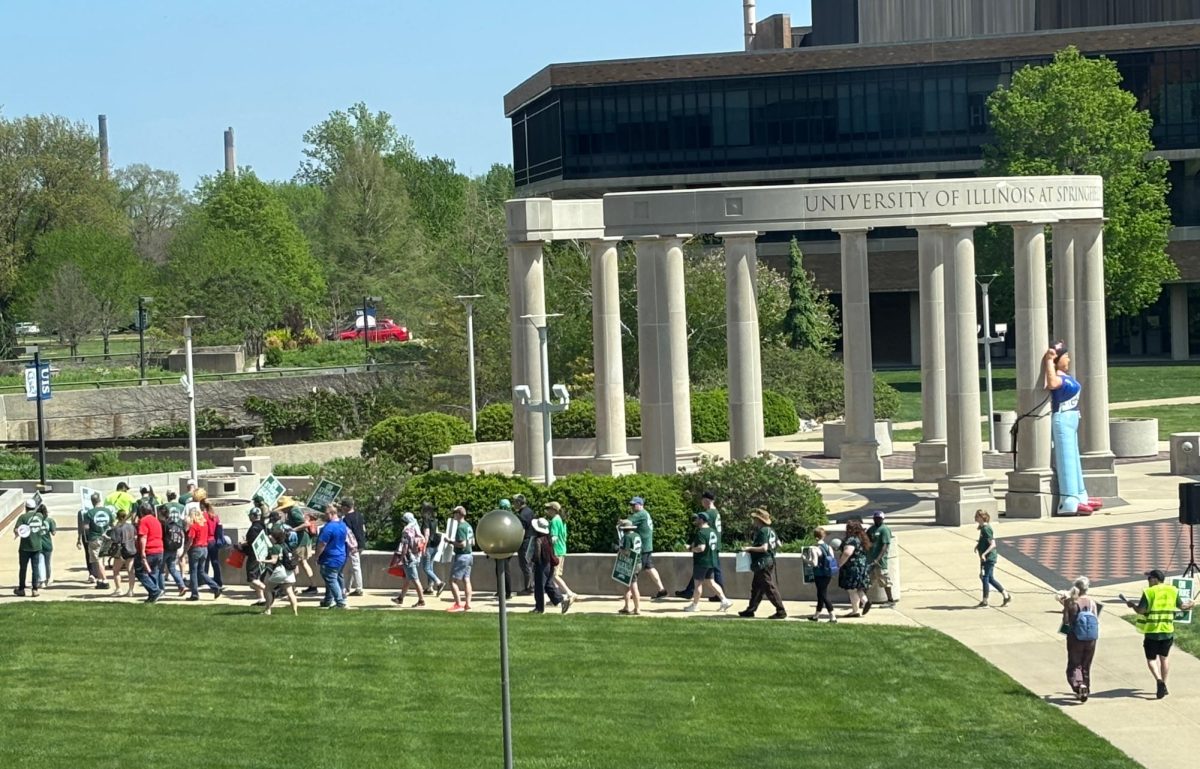
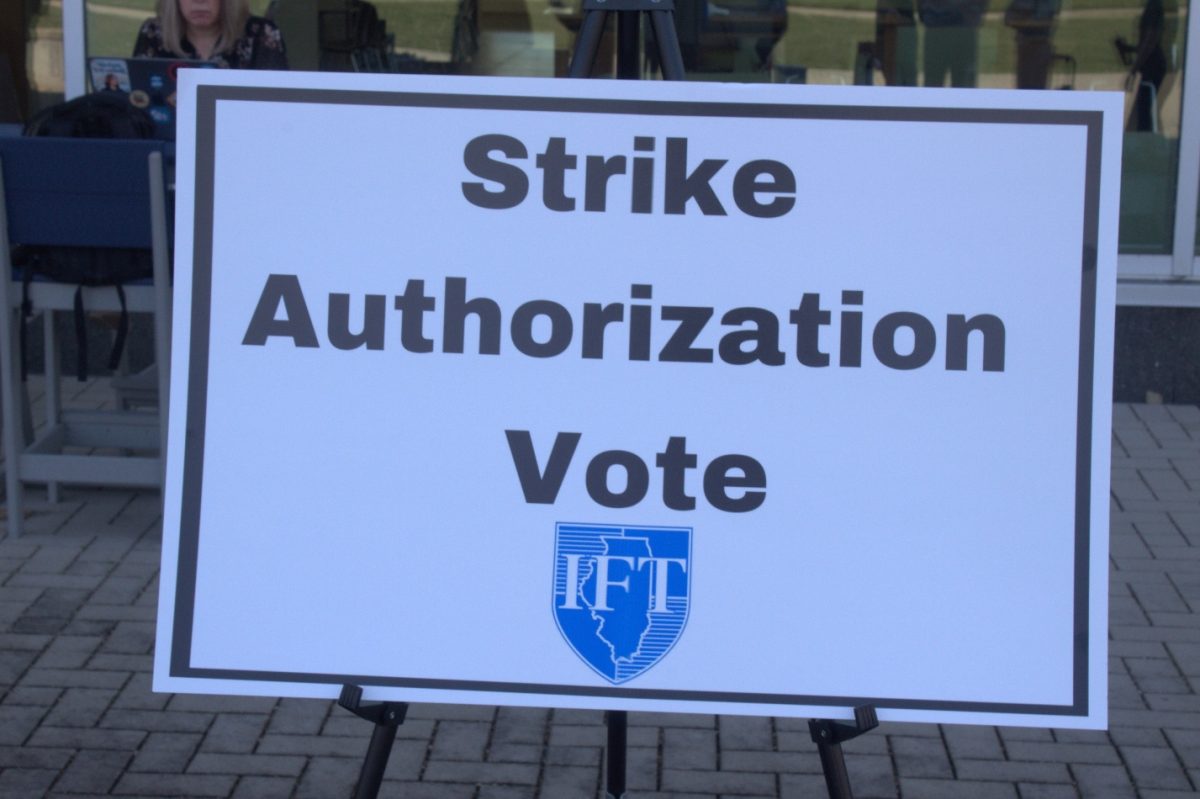
The University of Illinois Springfield (UIS) campus has become a focal point of labor unrest as some members of the UIS United Faculty tenure/tenure-track faculty union take to the picket lines. The strike, fueled by what members describe as stagnant wages and “dismissive leadership,” has brought the university’s internal tensions into the public eye.
The latest bargaining session between UIS United Faculty, the union that represents the professors, and the administration on April 9, resulted in another tentative agreement, this time on parking. The next negotiation meeting is scheduled for Friday, April 10.
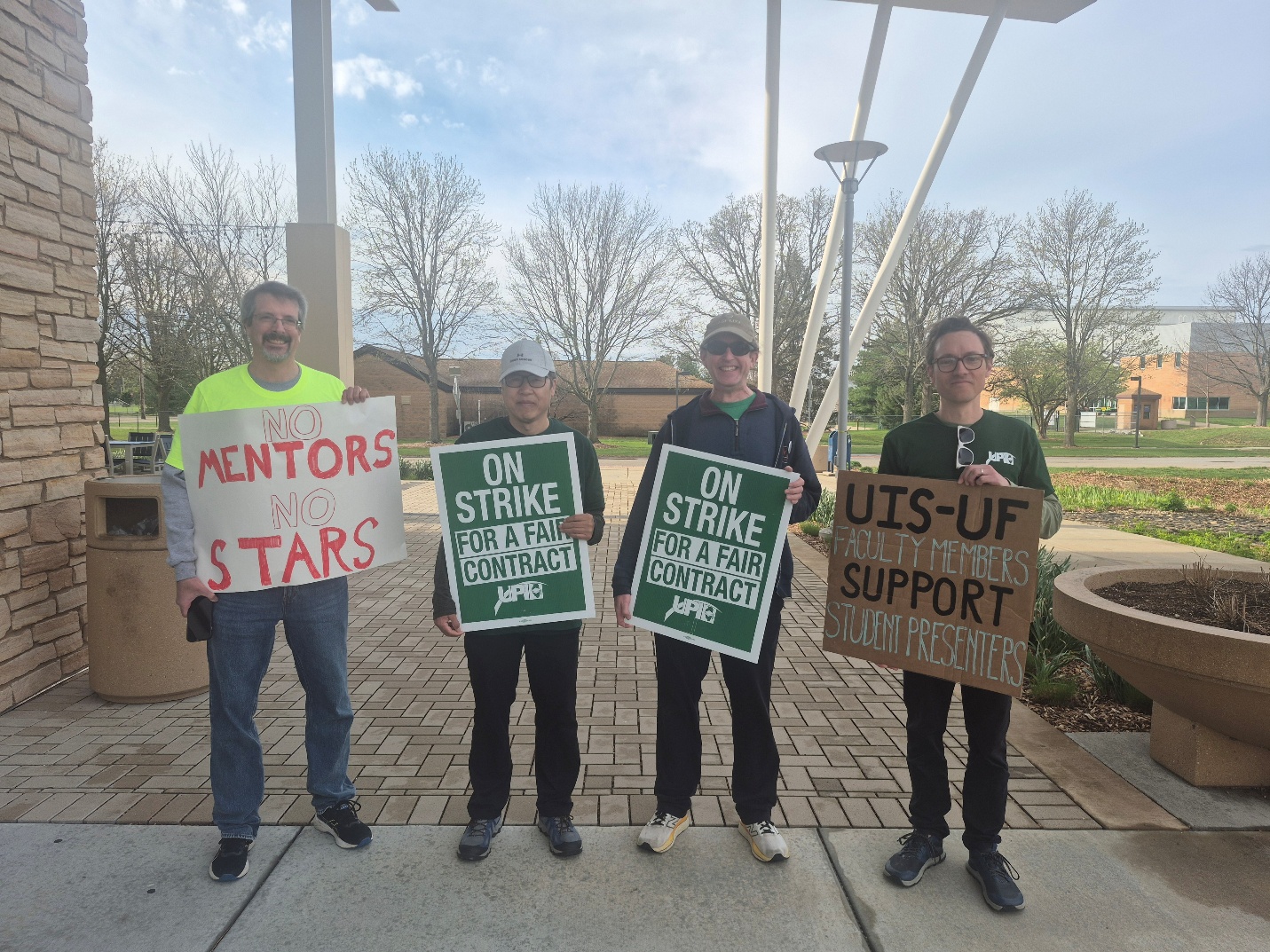
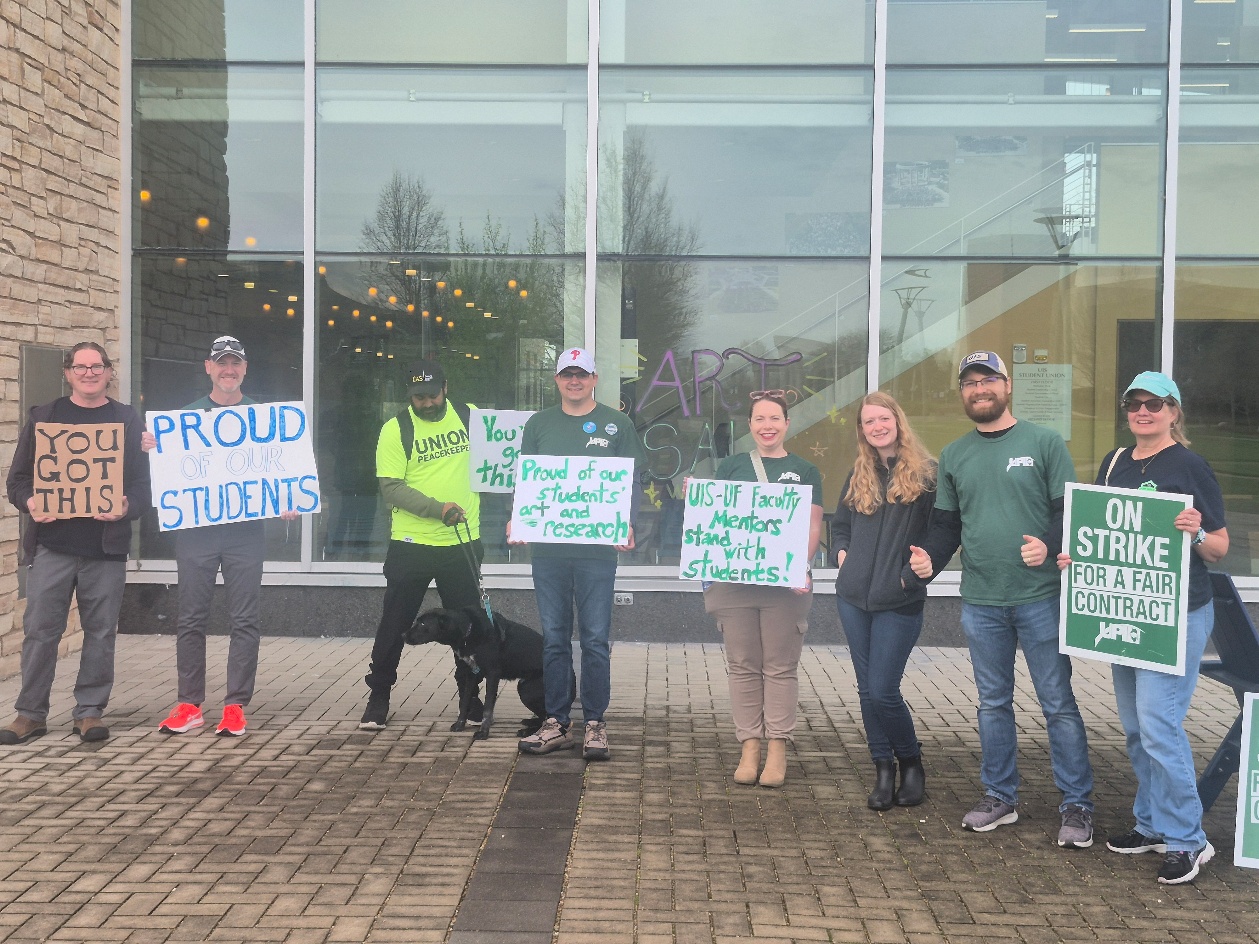
A central theme of the union’s messaging during this strike has been solidarity with students. A number of striking union members sought to draw attention to the relationship between student success and faculty working conditions by picketing outside the Student Union during the Student Technology, Arts, & Research Symposium (STARS Symposium) on Friday, April 10.
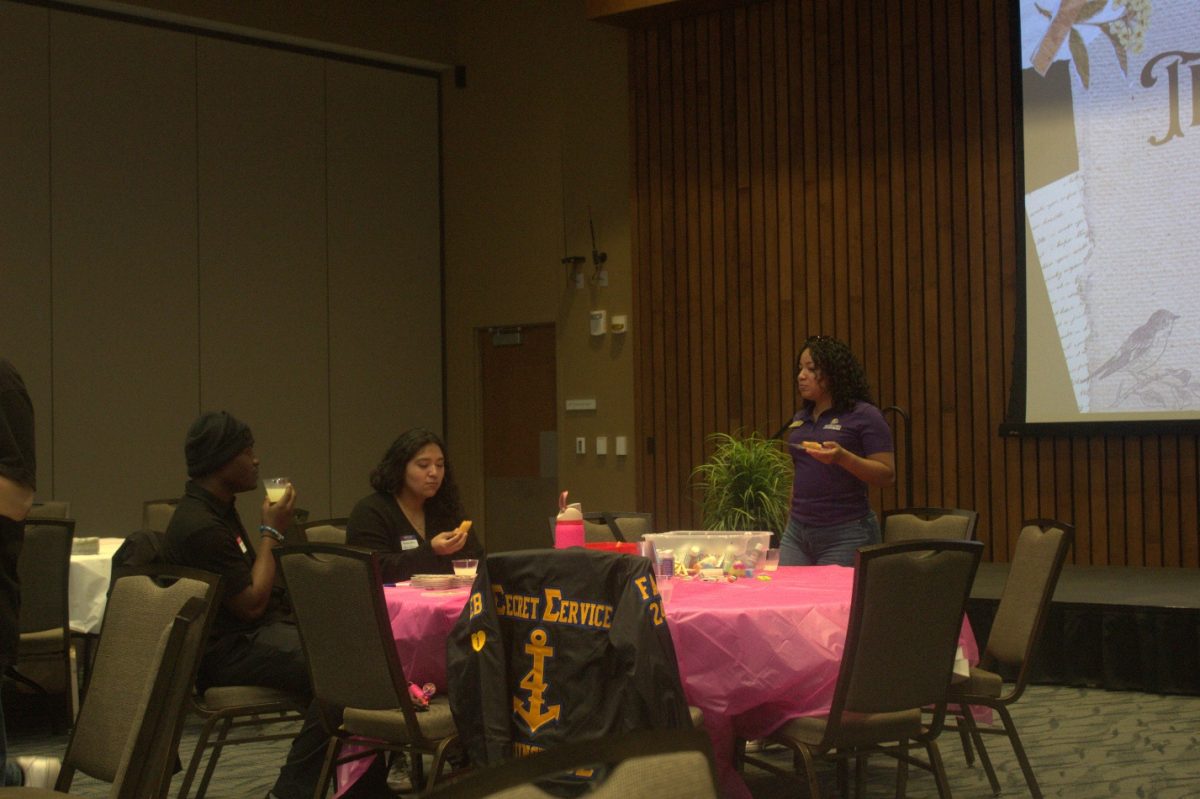
The STARS Symposium is an event designed to allow students to showcase their academic excellence by presenting research, art projects and musical performances, all under the guidance of faculty.
Striking faculty members stood on the North Patio of the Student Union holding signs that read, “No Mentors, No STARS,” “UIS-UF Faculty Members Support Student Presenters,” and “Proud of Our Students’ Art and Research.”
Numerous students have shown their support for striking faculty, either by walking the picket lines, giving speeches at strike rallies or writing messages in chalk on sidewalks across campus.

“The administration should recognize that if the needs of their faculty are not being met, to the point that the union felt it necessary to go on strike, then it reflects poorly on the university,” said Ray Hughes, UIS graduate student in the Public History program.
According to the union, the three primary unresolved issues in negotiations are faculty pay, protection from AI-surveillance and release time for union leadership. Union release time refers to giving union leadership paid time off to conduct union business.
Flyers distributed by striking faculty say that the university administration has seen an average raise of $116.67 per month for the 2025–2026 period. In contrast, the lowest-paid staff on campus were reportedly offered a raise of just 16 cents per hour, while faculty members were offered increases of $6 to $10 per month. Striking faculty argue that these figures are not just a financial burden but a sign of disrespect.
“Gooch got a raise. Faculty, staff, and students got the message,” one flyer reads, referring to UIS Chancellor Janet Gooch.
On Thursday, April 9 striking members of United Faculty gathered downtown to meet with state legislators about the circumstances that have driven them to strike and what they say is a failure of Gooch’s leadership.
“We are appalled that Chancellor Gooch will so easily sacrifice student learning in the name of administrative pet projects and the triple figure salaries administrators make,” said a statement from the union’s newsletter.
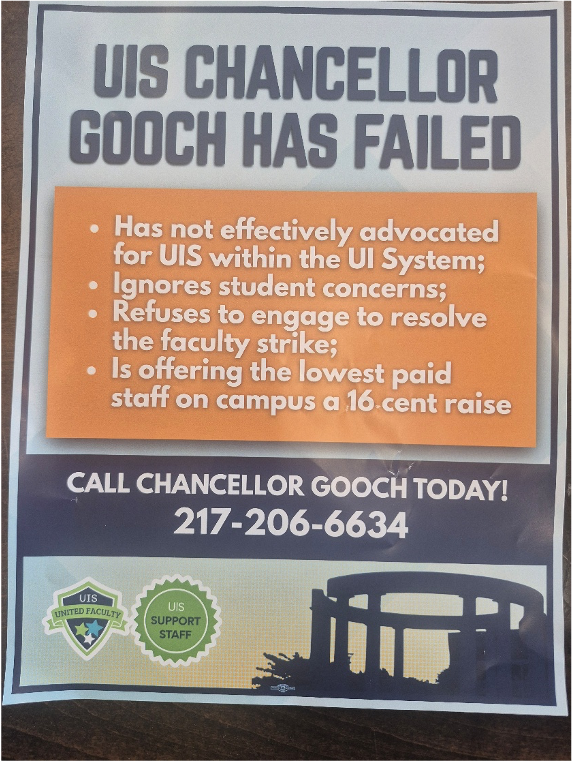
United Faculty’s criticisms aimed at Chancellor Gooch include:
- Failing to advocate for UIS within the broader University of Illinois System.
- Ignoring student and faculty concerns.
- Refusing to engage in meaningful negotiations to resolve the strike.
The University maintains that it does not believe the strike is necessary and that all its offers are in good faith and reflect the institution’s financial limitations.
“For the past several years, UIS has been working to address a multimillion-dollar structural deficit, the result of years operating under a budget model misaligned with realistic revenues, combined with enrollment challenges and compensation growth,” said a statement on the University’s collective bargaining page.
As the strike continues, the atmosphere on campus remains tense. Striking faculty encourage the public to contact the Chancellor’s office directly to demand an agreement with the union. The University continues to express their willingness to bargain with the union and their insistence that from the institution’s perspective, a strike is not necessary.









David Olien • Apr 11, 2026 at 2:46 PM
This attack on the Chancellor is unfair and damages the campus. She does not control the system or state budget which sets the parameters for bargaining . The focus should be on the legislature because it underfunds the entire UI system. And people should be opposing legislation which puts UI at the bottom of higher education campuses for future funding.