My path to the University of Illinois Springfield is almost certainly unique.
I spent the first two decades of my professional life as an actor, most of it based in New York City, where I still live. However, the experience of being elected as an officer of my union, Actors’ Equity Association, gradually shifted my focus toward worker advocacy. And despite a reasonably successful career on stage, I eventually decided it was time to pivot to working full-time in labor.
Having already completed an undergraduate degree in human resource management, I knew I wanted to deepen my expertise in organizational management, worker engagement, and leadership, all of which would equip me to make that transition successfully. This is what led me to the University of Illinois Springfield.
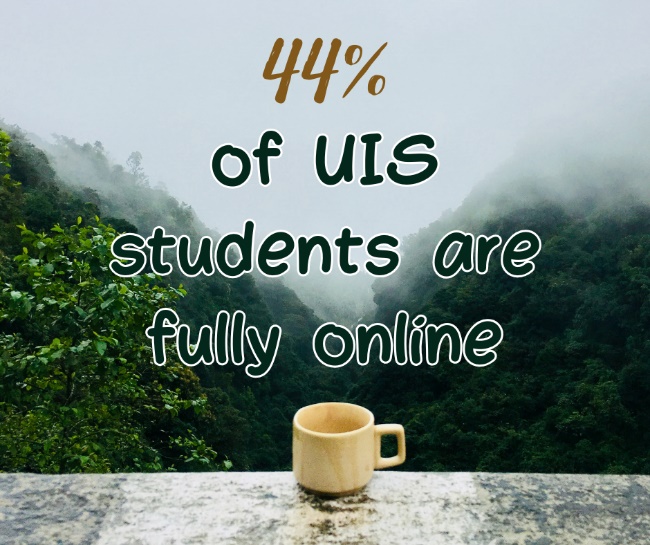
Its Network of Schools of Public Policy, Affairs and Administration (NASPAA)-accredited Master of Public Administration (MPA) program, graduate certificate in nonprofit management, and reputation for preparing public servants made it a clear frontrunner in my search for a graduate school. And because I was still working full-time in an Off-Broadway show when I enrolled, its fully online, asynchronous format made it not only a practical choice, but the right one. Now, as I approach graduation this summer, I can say without hesitation that the quality of the education I’ve received has exceeded my expectations.
That is no small feat. Delivering high-quality online education is tough. It requires intentional course design, consistent engagement, and a level of care that is easy to overlook in a virtual environment. And yet, throughout my time at UIS, the faculty have been exemplary. They have been thoughtful, responsive, rigorous, and deeply committed to student success. Whatever UIS is as an institution, it is built on their work.
Which is why this moment is so deeply frustrating.

What should be my celebratory final stretch at UIS is instead being overshadowed by a strike that did not have to happen; a strike forced by an administration seemingly unwilling to meet basic needs at the bargaining table.
Our faculty describe a negotiation process that has been slow-walked for months, with key decision-makers absent from bargaining, proposals not meaningfully engaged, and even no-cost ideas dismissed.
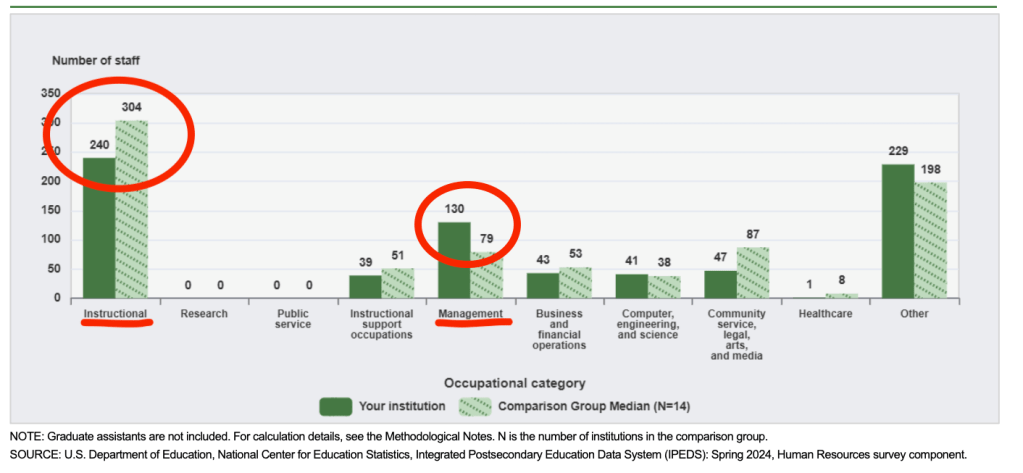
The administration has proposed no raises this year and only a 0.5% increase next year while administrators received cost-of-living adjustments. It has declined to commit to safe learning environments, private faculty offices, anti-bullying protections, and compliance with gender-neutral restroom requirements under state law. And it has sought to diminish faculty input in academic program decisions, even as these programs face potential cuts.
No one benefits from a strike. Anyone in the labor movement will tell you that. It disrupts learning, strains relationships, and imposes real costs on faculty who would much rather be teaching. But strikes don’t come out of nowhere. They happen when workers reach the conclusion that their employer is not engaging in a way that makes resolution possible.
As someone who has spent years in the labor movement—as a worker, a union member, an elected union officer, and now a full-time union staff member—I recognize that moment when I see it. And as a student at UIS, I recognize what I owe to the people who have made my education possible.
The faculty at UIS are not asking for anything extravagant. They are asking for fair compensation, safe and functional working conditions, a voice in the academic life of the institution, and the ability to do their jobs with dignity and integrity. And as I prepare to graduate and carry what I’ve learned into my work in the labor movement, it is impossible to ignore the irony of this moment. The very institution that has helped prepare me to advocate for workers is now a place where those workers are being forced to strike.
I stand with UIS faculty because I have seen firsthand the value of their work. And because if we want UIS to remain a place of serious, high-quality education, we cannot separate that goal from the conditions under which its faculty teach.
In Solidarity.
Sid Solomon, SHRM-CP
UIS MPA Candidate
The Observer invites members of the campus community to submit opinion pieces for possible publication. Columns, which are subject to editing, should not exceed 900 words and should address issues of interest to the campus community. Columns can be emailed to [email protected].
![[Mikayla Rodgers speaking on campus in support of striking UIS faculty.]](https://uisobserver.com/wp-content/uploads/2026/04/image001-1-901x1200.jpg)