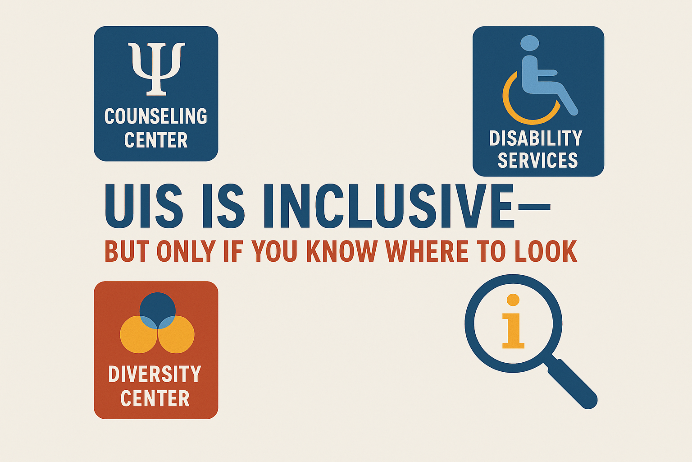
The University of Illinois Springfield prides itself on being an inclusive, student‑centered campus. From diversity statements to resource offices and email announcements, the language of inclusion is everywhere. And in many ways, UIS demonstrates a strong commitment to equity and student support. But inclusion at UIS often depends on one key factor: knowing where to look and knowing how to ask.
UIS is commonly characterized as a commuter campus, a description supported by enrollment patterns. According to UIS enrollment datafor Fall 2025, approximately 44% of students were enrolled fully online, while 56% attended on‑ground or blended courses, many of whom lived off campus. This structure means that a substantial portion of the student population has limited physical presence on campus beyond scheduled class times.
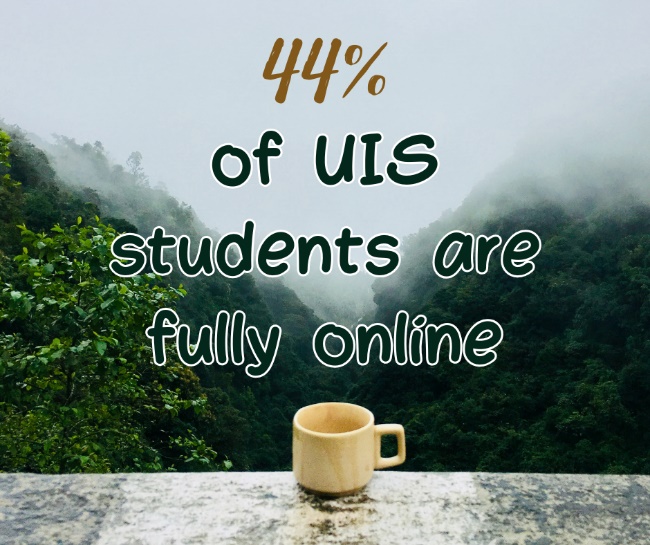
This commuter reality matters. Many students arrive for class and leave immediately afterward due to work obligations, caregiving responsibilities, transportation costs, or long travel times. When access to inclusive resources depends on spending extra time on campus, attending events, visiting offices during limited business hours, or encountering tabling displays placed in high‑traffic areas, commuters and online students can be unintentionally excluded.
Housing data further illustrates UIS’s enrollment structure. According to the 2023–2024 UIS General Catalog, residence halls operated at approximately 78% occupancy. While this figure does not, on its own, prove that a majority of students live off campus, it does suggest that on‑campus housing does not serve the full student population, and that residential life reflects only one segment of the UIS community. More current or detailed housing data could offer clearer insight, but publicly available figures already indicate that many students engage with the university primarily as commuters or distance learners.
UIS offers a wide range of inclusive and support‑focused resources, including the Counseling Center, the Diversity Center, Gender and Sexuality Student Services, and Disability Services. These offices play a critical role in supporting student success and well‑being. However, the university does not publish aggregate data showing how many students access these services each semester or academic year. Without publicly available usage data, it is difficult to assess whether current outreach efforts are effectively reaching the students who may benefit most.
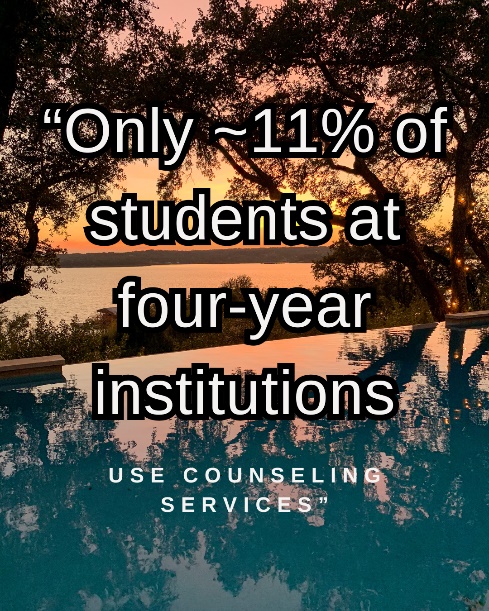
National research provides important context. According to the Association for University and College Counseling Center Directors, between 8% and 19% of students at smaller four‑year institutions access counseling services in a given academic year, with an average of about 11% utilization across four‑year universities. A 2025 report from Inside Higher Ed similarly found that, despite growing awareness of mental‑health needs, campus counseling centers nationwide continue to serve only a fraction of enrolled students due to factors such as awareness gaps, staffing limitations, stigma, and structural barriers.

If UIS follows national trends, this suggests that hundreds of students who could benefit from support services may not be accessing them, even though student fees help fund these resources. While this estimate cannot be confirmed without institution-specific data, it highlights the importance of examining not only whether services exist but also how visible, accessible, and navigable they are for students with diverse life circumstances.
Access gaps are not evenly distributed. Commuter students, first‑generation students, adult learners, online students, and those balancing employment or family responsibilities may face greater obstacles in learning about services, scheduling appointments, or engaging consistently with support offices. Barriers such as limited office hours, unclear eligibility criteria, stigma, and reliance on in‑person outreach mechanisms can unintentionally privilege students with more time and physical presence on campus.
When students do find the right office or advocate, the support can be meaningful and life‑changing. The issue is not the absence of inclusive resources at UIS, but rather their uneven visibility and accessibility across the full student population.
UIS has an opportunity to strengthen its inclusive mission by asking a simple yet critical question: Who is being unintentionally excluded? Answering that question may require more intentional outreach, clearer communication and greater transparency around student engagement with support services.
Inclusion should not feel like a scavenger hunt. If UIS wants every student to thrive, access to support must be as clear and accessible as the university’s stated commitment to inclusion itself.

![[Mikayla Rodgers speaking on campus in support of striking UIS faculty.]](https://uisobserver.com/wp-content/uploads/2026/04/image001-1-901x1200.jpg)