Spider-Man in the movies and comics is Peter Parker, a superhero. Peter always tries to balance personal life and school with after-school activities like stopping crime. The life of a student-athlete isn’t so different (they don’t have to punch any bad guys), but they always have to balance school work, their personal lives, and, on top of that, performing at a high level under pressure. University of Illinois Springfield students face the everyday challenge of balancing their roles as students and athletes for their mental health.
This isn’t just a challenge for UIS student-athletes, but for campuses everywhere. Student-Athletes live double lives that are equally demanding: Student and Athlete. Beyond the games, practices, and training, many college athletes are quietly struggling with balancing student and athlete, which negatively affects their mental health.
Even though mental health awareness and literacy are on the rise, stigma survives, and for many UIS Division II athletes and athletes across the globe, help and resources can feel so close yet so far away.
The Silent Battle
I interviewed five UIS student-athletes, ranging from freshmen to seniors to graduate students, in sports like soccer, track, and basketball. Despite some differences, many felt the same pressure to perform, stress of academic workload, and loneliness of being far from home.

For senior soccer player Corne Boshoff, the hardest part isn’t physical exhaustion, but rather mental exhaustion. Boshoff, being a senior, is having a hard time finding the motivation to finish the year strong. He describes it as “Senioritis.”
“I feel like staying motivated to finish out the semester is my biggest mental struggle. To be able to keep focus when the end is so near is a challenge that I never actually thought was real.”
Graduate student Eduardo Pinna, also from the men’s soccer team, understands pressure better than everyone. As a goalkeeper, wins and losses are almost solely in your hands. “The mind game is probably the biggest part, managing pressure and expectations, both from myself and others. You want to perform at the best of your ability, yet when you’re off a little bit, it’s easy to overthink things and get frustrated.”
These pressures aren’t just for show. A 2021 study from Sports Psychologist Janaina Fogaca in Combining Mental Health and Performance Interventions found that student-athletes experience similar or higher rates of depression and anxiety than their peers who are not in athletics. Up to half reported overwhelming anxiety during their college years due to being student-athletes. Even with these facts, student-athletes are less likely to seek help than non-athlete college students due to time constraints, stigma, or fear that admitting vulnerability could be taken as weakness.
A high-stress lifestyle and environment do not mix well with not asking for help. This mix affects the student-athlete experience at UIS and nationwide.

Balancing Two Worlds
Junior track and field runner Maddie Miller, who is the first UIS student to be the Women’s Conference Champion runner, says her toughest challenge is balancing her own expectations and controlling the pressure she applies on herself: “I constantly want to be perfect, but that’s not realistic,” she says.“There is always something that I can be doing to get better in both areas. This can be challenging, but it is essential in balancing an efficient student-athlete lifestyle.”
Miller also faces the challenge of being away from her husband, who recently moved away to attend Officer Development School for the United States Navy.
“This has been a difficult transition for me. My family and my husband are my biggest sources of support and strength, so it is challenging being far. However, their constant love and support keep me going.”
Pinna, who grew up in Italy, knows this all too well. “Being away from home is tough. You can’t just go home on the weekend or see family easily. You adapt and grow to be independent and established, but you miss the small things from being at home and feeling that support system daily.”
Resilience through the tough times and isolation is what makes UIS student-athletes so strong. It also highlights that if you don’t get the love, help, and support you need, there’s a thin line separating strength and suppression.

“This Too Shall Pass. Nothing is Permanent.”
For UIS freshman basketball player Evan Simon, learning how to manage his workload, stay ahead of assignments, and get good grades while also managing his personal life and sports has been a process. “Trying to maintain grades and trying to stay in touch and talk regularly with friends and family is tough. I try not to get too high or too low—just stay neutral.”
When asked what advice he would give to other student-athletes struggling with balance, pressure, and their mental health, Simon said: “This too shall pass. Nothing is permanent.”
His teammate, Junior guard Britt Dutton, talks about the struggle of not being your own worst enemy and how to combat that. “When I’m not playing my best, I tend to get negative on myself. It’s hard to move forward sometimes. But I’ve learned to surround myself with people who lift me.”
The gap between mental health awareness and actually taking action mirrors findings from Lauren Beasley and Steven Hoffman’s 2023 study, A Descriptive Look at the Mental Health Literacy of Student-Athletes, which showed that while college athletes have excellent mental health literacy, stigma remains high, causing student-athletes to not seek professional help. Student athletes understand the importance of good mental health; they just don’t always feel comfortable acting on it, with the stigma that talking to someone and being vulnerable shows weakness.
Coaching on and off the court
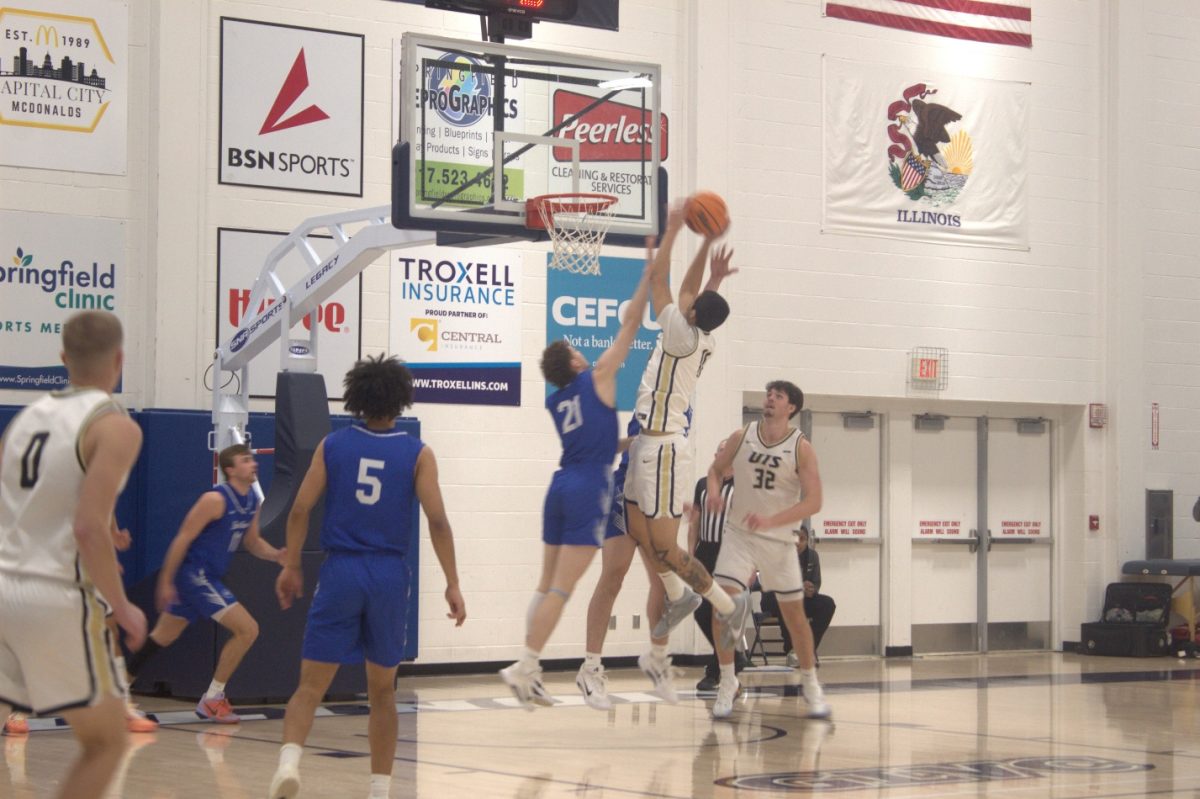
UIS men’s basketball coach Matt Brock understands the pressures his players face. As a former player himself and entering his sixth season as head coach of the Prairie Stars, he feels the need to check in with his players. He can identify when body language, tone, or effort level may be off for a player.
“We have an outstanding staff that sees our men every day,” Brock says. “Typically, we can see something going on before the athlete decides to share. We meet monthly with each player to check in on all things outside of basketball.”
When a player is struggling mentally, Brock’s approach is built on empathy and perspective. “I like to remind them of when they were playing at a high level and when things were clicking. I encourage them to get a little extra work in, which typically gives them confidence. Most importantly, I want them to know they’re more than basketball players. ”
Brock makes sure to emphasize to every player and the team that: “Our value is not measured in playing time.”
It’s a simple phrase with so much weight and meaning behind it. For players who struggle with being their own enemy and measuring self-worth by performance or playing time, a simple reminder can be crucial. He also makes it clear that stepping back is okay. “We help them get the time and support they need, whether that is a day off and/or talking to the counseling center.”
That approach aligns closely with what research supports. Fogaca’s study found that social support from coaches and teammates acts as a barrier against stress and improves both performance and overall well-being. When athletes feel seen and supported, their coping skills improve, and so does their mental health.

Building Connection and Community
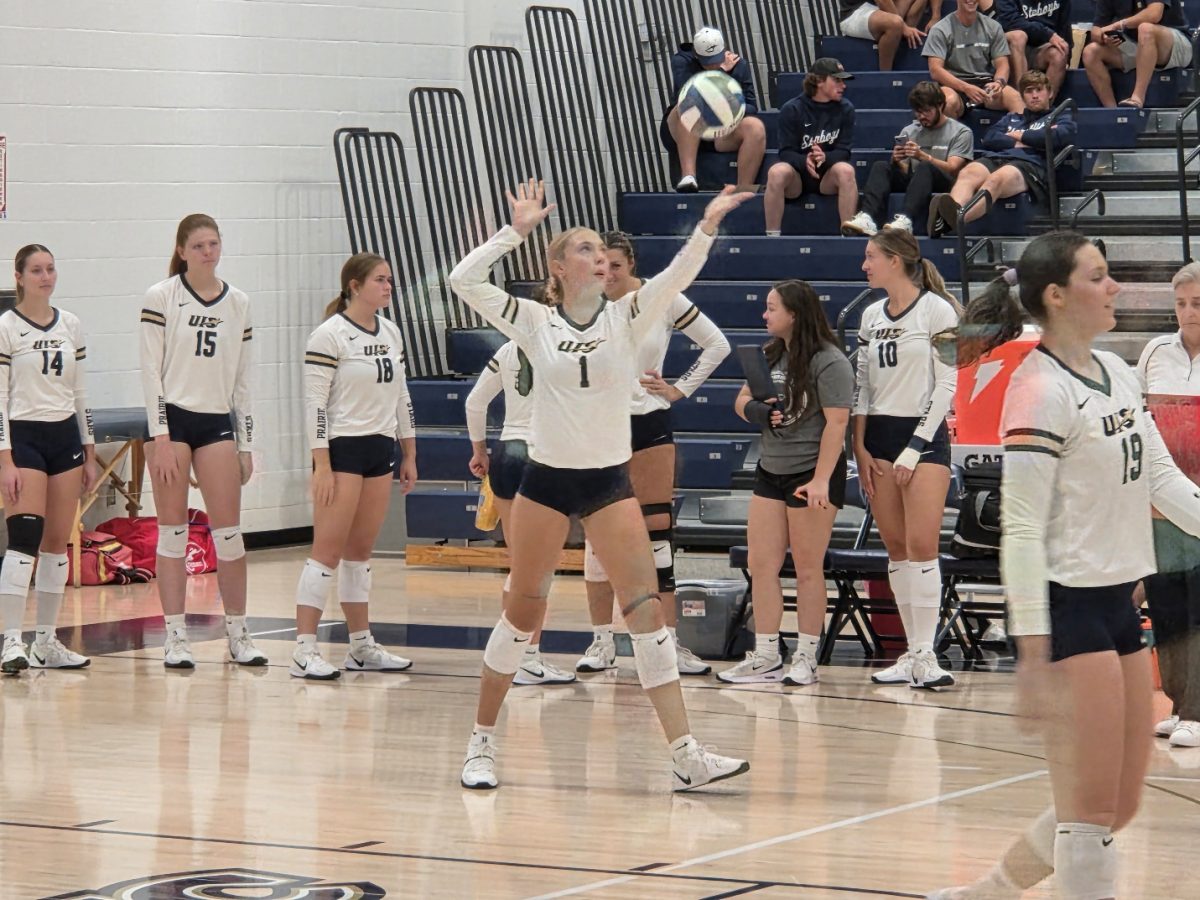
UIS volleyball coach Laura Ulrich is in the middle of her first season at the helm of the Prairie Stars, bringing lots of Division II experience. This experience has taught her to “try to approach mental health similarly to physical health. It’s important and deserves care, attention, and openness. I want my players to know they’re supported as people first, not just athletes.”
If something seems off, Ulrich checks in personally. “Sometimes they don’t need solutions,” she says. “They just need someone to listen and care.”
After a setback like a losing streak, Ulrich shakes things up with strategies like a lighter practice. “Something fun that reminds them that they are in it together and that it’s a game we love. I also highlight effort and growth, not just outcomes. Confidence comes from feeling valued and together, and I try to help the team remember that.”
Ulrich’s philosophy supports the findings in The Relationship of Passion to Sport Specialization, Injury, and Burnout, a 2025 study by Johnathan Dallman. The research discusses the difference between passion motivated by joy and personal growth, and passion that is obsessive and fueled by negative things like pressure and a constant need for validation. Athletes, motivated by joy and personal growth, saw lower burnout and a better overall mental well-being.
It can be in the midst of a losing streak to obsess about getting all the wins back at once. Ulrich knows that this is a recipe for disaster and takes a different approach. “I try to bring the focus back to connection and what we can control. We’ll acknowledge things that are going wrong, or hard things, but then shift toward what we can learn and build on.”
Bigger than Sports
For many student-athletes, mental and physical wellness boils down to identity. Who am I when I’m not competing? What happens when my sport ends? How do I treat myself when I fail?
Boshoff has asked himself that same question throughout his collegiate career. His answer comes from faith. “When I do badly in a game or on an exam, I remind myself that being a student-athlete doesn’t define me. I find my identity in Christ, and that gives me peace.” Boshoff also admits it’s a hard pill to swallow as a Division II athlete, accepting that being a student comes before being an athlete.
“I think, especially at the division two level, it’s realizing that education is the more important side of the coin when it comes to being a student-athlete. Making sure that you are studying, doing your homework, and being the best student you can be to set up your life after college is really important.”
His teammate Pinna takes a balanced approach. “I try to establish a good routine focusing on rest and recovery. I enjoy spending time with teammates and friends off the field because it helps to clear my mind. Talking as well, rather than holding in what’s bothering you, truly helps.”
Miller tries to find comfort in the small things like going to coffee shops, walking her dog, and spending time with loved ones. “These are all ways in which I prioritize my mental health.”
Awareness of being more than your sport and not letting it define you is crucial. Dallman’s study suggests that when athletes define themselves solely through performance, they’re more prone to anxiety, burnout, and depression. It’s a lesson all UIS coaches preach to their players, making sure players have the awareness and resources that they need to succeed.

A Stigma that isn’t going away
Despite the growth in openness and communication surrounding mental health in sports, stigma remains strong and alive in athletic culture. Beasley and Hoffman’s research found that even with a strong awareness and mental health literacy, student-athletes still have a stigma about seeking help from mental health professionals. There is a widespread national perception that seeking help signals weakness, causing athletes to turn away from using counseling services, even when they’re completely free.
At UIS, that stigma seems to be alive and well. Several student-athletes that I interviewed suggested talking to coaches, roommates, or teammates when struggling with mental health, but none disclosed if they had ever reached out to a therapist, and none offered this advice to other student-athletes. This aligns with national trends showing that athletes are less likely to visit university counseling centers than non-athletes, despite similar or worse mental health struggles.
Research suggests it isn’t ignorance but rather fear of being judged. Boshoff challenges this fear and encourages fellow student-athletes to reach out. “Don’t be afraid to tell someone you’re not okay. Maybe it’s exactly what you need.”
Beyond the Game
As awareness grows, the hope is that athletes should no longer have to feel they have to choose between mental and physical health, but rather choose balance, including the idea that talking to a counselor is as normal as seeing the athletic trainer or the thought that mental reps count as much as weight-room ones. For UIS student-athletes and coaches, the lesson is clear. Mental health isn’t secondary to the physical parts of sports, but rather a crucial part of the game. There’s a responsibility as a student-athlete to take care of your mental and physical health to excel in the classroom and in competition. Coaches and professionals are there to provide the resources and it’s up to student-athletes to take the first step. It’s a privilege to have the power to be a student and an athlete, however, with great power comes great responsibility.